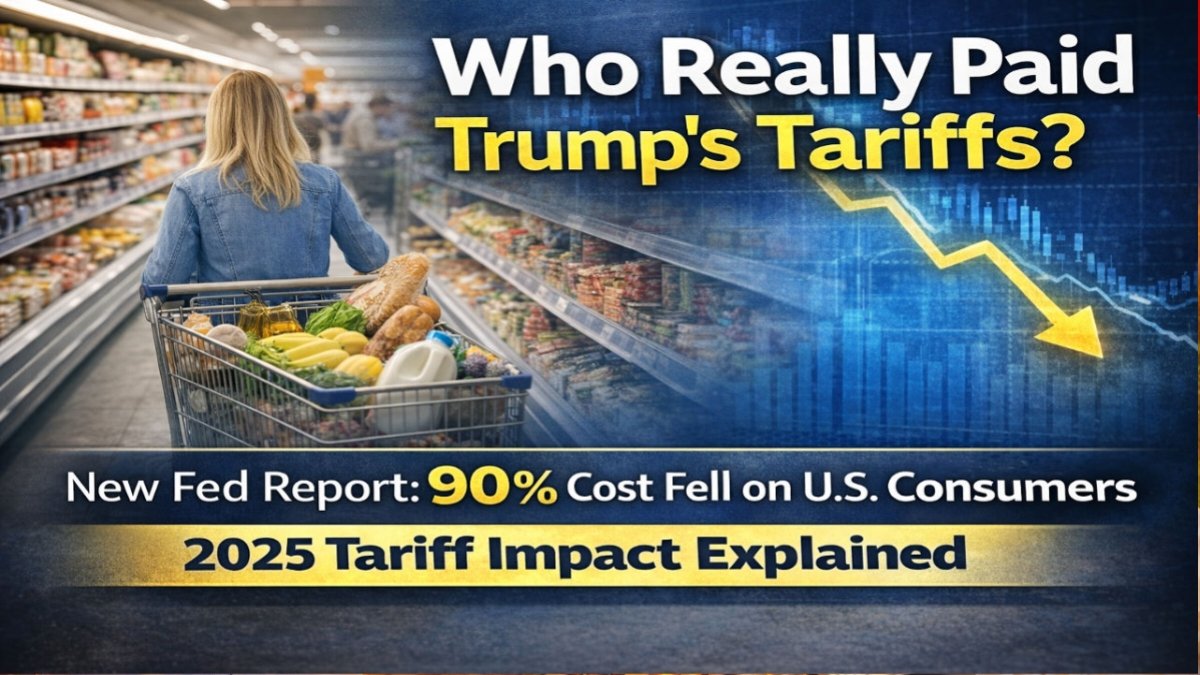
New Analysis Finds U.S. Consumers and Businesses : A new report from the Federal Reserve Bank of New York finds that American consumers and businesses absorbed the vast majority of tariffs imposed in 2025. The analysis challenges claims that foreign exporters paid most of the costs and instead concludes that nearly 90% of the economic burden fell on U.S. firms and households.
The findings come as debate continues over the effectiveness of the Trump administration’s trade policies and their broader economic impact.
Tariff Burden Fell Largely on U.S. Importers
According to the report, the average U.S. tariff rate climbed to 13% in 2025, up sharply from less than 3% previously. Between January and August, U.S. importers bore 94% of tariff costs. By November, exporters were carrying slightly more of the burden, but American importers were still responsible for 86%.
Researchers concluded that U.S. firms and consumers continued to shoulder most of the financial impact from higher import taxes.
Administration Defends Trade Strategy
The Trump administration has maintained that foreign producers and middlemen have absorbed much of the cost. In recent public statements, officials argued that export-dependent nations have had to lower prices or reduce profits to remain competitive in the U.S. market.
The White House also pointed to broader economic indicators to defend the policy. The U.S. economy expanded at a 4.3% annual rate in the third quarter of 2025, marking the strongest growth in two years. Employers added 130,000 jobs in January, and corporate profits remained solid.
Inflation Remains Moderate
Many economists had predicted that higher tariffs would drive inflation upward. So far, price increases have remained relatively stable. The Consumer Price Index rose at a 2.7% annual rate in December, unchanged from November. Updated inflation data is expected soon and could provide further insight into the long-term effects of the tariffs.
Surge in Tariff Revenue
The Treasury Department collected $287 billion in tariff revenue in 2025, representing a 192% increase from the previous year. Supporters argue that this revenue strengthens federal finances and supports domestic industries.
However, critics note that the revenue ultimately comes from higher costs paid by U.S. businesses and consumers.
Legal Uncertainty Ahead
The future of some tariffs remains uncertain. The Supreme Court is expected to rule on the president’s authority to impose certain levies under emergency powers law. If the court invalidates those measures, the federal government could owe businesses up to $168 billion in refunds, according to estimates from the University of Pennsylvania’s Wharton School.
As policymakers continue to debate trade policy, the central question remains: who truly pays for tariffs — foreign exporters or American consumers? The latest analysis suggests that, at least in 2025, most of the burden stayed at home.